
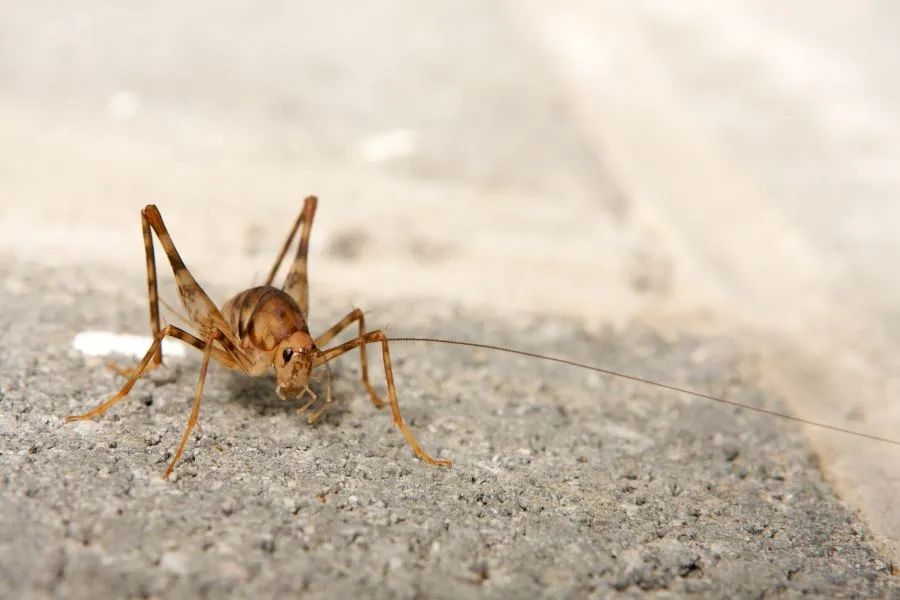
Meet the camel cricket, also known as the spider cricket, cave cricket, or “what on earth is that thing in my basement?!” These hump-backed, long-legged jumpers don’t chirp (mercifully), but they do love a good scare, launching themselves at you like tiny acrobats. House crickets, on the other hand, are the chirping kind, flatter, winged, and far more likely to sneak toward warmth and light than your dark, damp crawlspace.
Telling them apart isn’t just a fun party trick—it actually matters. Each species needs its own prevention and treatment game plan if you ever hope to stop the hopping horror show for good.
What Are Camel Crickets (Spider Crickets)?
Camel crickets, scientifically known as the Ceuthophilus genus, are easy to recognize once you know what to look for. They have a pronounced, “camel-like” humped back when viewed from the side, very long antennae, and elongated hind legs. Adults are typically light tan to dark brown, sometimes mottled. Their most distinguishable feature is that they’re wingless, so they cannot fly or chirp. If you’re hearing chirps, you can instantly know that you’re dealing with another species (often house or field crickets), not camel crickets.
Camel crickets favor cool, dark, and moist areas. Indoors, they’re frequently found in storage spaces and garages, especially around stored boxes, utility rooms, or places with occasional condensation. Outdoors, they hide beneath stones, logs, mulch, or stacked wood where humidity stays higher than the surrounding desert air.
These problematic critters are opportunistic scavengers that feed on organic materials. While they’re largely considered nuisance pests, they may sample paper products and occasionally fabrics, especially when other food is scarce.
Pro Tip: Using sealed plastic bins instead of cardboard and reducing indoor humidity go a long way in preventing this pest.
You can rest easy knowing camel crickets are not known to bite people and are not linked to disease transmission. Their main impact is nuisance and, in some cases, minor damage from feeding. Controlling moisture and denying harborage are the most effective long-term strategies.
What Are House Crickets?
House crickets, scientifically known as Acheta domesticus, are the tan-to-yellowish crickets with three dark bands on the head. Adults are typically around ¾ inch (19–22 mm). Unlike camel crickets, house crickets have wings, and it is specifically the males who chirp, also known as stridulating, by rubbing their wings. Chirping is most noticeable evenings and at night.
House crickets are attracted to lights, which is why you’ll often see them around porch lights or near windows and doors at night. Indoors, they tend to wander into warmer zones, including kitchens, bathrooms, and rooms with electronics or appliances.
It is expected that house crickets may feed on fabrics, such as cotton, wool, silk, linen, and are particularly attracted to materials soiled with perspiration or food. They can also chew on paper and occasionally other household items.
Pro Tip: Washing clothing before storage and using sealed containers can help protect your valuables. Regular vacuuming, sealing pet food, and fixing gaps will also reduce the chance they’ll settle in.
Fortunately, similar camel crickets, house crickets are considered nuisance pests and are not generally harmful to people. Large populations can cause fabric damage and keep you awake with persistent chirping. However, an infestation is unlikely to cause health or property damage.
Camel Crickets vs. House Crickets — How to Tell the Difference
Body & wings
- Camel cricket: Humped back, no wings, very long legs, very long antennae; silent.
- House cricket: Flatter body, wings present, males chirp, antennae long but proportional.
Behavioral Clues
- Camel cricket: Often jumps erratically when startled; avoids light.
- House cricket: May chirp at night if male, drawn to lighting; may gather where warmth and food crumbs are available
Damage Patterns
- Camel cricket: Opportunistic feeding; may nibble paper and occasionally fabrics if other food is scarce.
- House cricket: More commonly implicated in fabric damage, especially items soiled with perspiration/food, and can sample paper or plant material.
Hiding Spots
- Camel cricket: Basements and cluttered garages where humidity is higher than the surrounding air. Outdoors beneath rocks, woodpiles, and mulch.
- House cricket: Around lights at night, slipping in through gaps at thresholds and torn screens or where food crumbs and shelter are available. Indoors in kitchens and bathrooms, behind appliances, and rooms with electronics.
Health & Safety: Are Camel or House Crickets Dangerous?
Good news: neither the chirping house crickets nor their silent, spring-loaded cousins are out to get you. They don’t bite, they don’t spread disease, and they’re mostly just professional jump-scare artists. That said, big indoor populations can get messy—think droppings, shed skins, and the occasional chew marks on your stuff. If you’re sneezy or sensitive, a good vacuum routine can go a long way.
And yes, pets think crickets are free snacks. Usually harmless, unless those bugs just walked through pesticide-treated areas. If you or a neighbor recently had pest control done, keep your furry friends away until everything’s dry and cleared for re-entry.
Don’t worry, though! Dr. Death Pest Control always keeps pet safety top of mind.
One more reason not to roll out the welcome mat: crickets can attract bigger, hungrier pests. Spiders, centipedes, and even rodents see a cricket buffet as an open invitation. What starts as a few stray jumpers can quickly turn into an all-you-can-eat nightmare for the rest of the creepy-crawly crowd. Keeping crickets under control helps keep the whole food chain off your floor.
Henderson Seasonality: Why You See More Crickets at Certain Times
The Vegas Valley experiences a summer monsoon pattern that can push higher humidity into the valley, typically in July and August. That extra moisture can create more favorable micro-habitats for crickets and other pests. These infestations can occur outdoors and around structures that are shaded and damp while hot afternoons drive insects to seek cooler, sheltered spots. Managing moisture and light around entrances during these periods reduces indoor incursions.
In climates like that of Southern Nevada, even small moisture sources, AC condensate, shaded irrigation zones, or poorly sealed garage doors, can create the cool, humid pockets camel crickets love.
What To Do Next (Simple Checklist)
- Confirm the cues.
- Silent, hump-backed, wingless, long-legged, dark/moist areas = camel crickets.
- Chirping at night, wings present, drawn to light/warmth = house crickets.
- Silent, hump-backed, wingless, long-legged, dark/moist areas = camel crickets.
- Change the habitat.
- Reduce moisture (repair leaks, improve ventilation, manage condensate).
- Clean up clutter and replace cardboard with sealed plastic bins in garages/storage.
- Tighten sanitation (vacuum crumbs, seal pet food).
- Reduce moisture (repair leaks, improve ventilation, manage condensate).
- Block the entrances.
- Weather-strip doors, fix thresholds, repair screens, caulk utility penetrations.
- Consider lighting choices at doors (limit dusk-to-dawn glare that attracts house crickets)
- Weather-strip doors, fix thresholds, repair screens, caulk utility penetrations.
- Treat strategically.
- Target harborages rather than “spraying everywhere.”
- Combine exclusion + habitat fixes with precise treatments for best long-term relief.
- Target harborages rather than “spraying everywhere.”
- Call in a pro if needed.
- Chirping keeping you up, or jumpy “spiders” in the garage? Dr. Death can ID the species and set a plan that actually fits the biology.
Why Professional Identification Matters
Correct ID speeds up control and saves effort:
- Camel crickets respond best to moisture reduction (dehumidification, fixing leaks, improving airflow), removal of harborage (cardboard, clutter), and targeted treatments where they shelter.
- House crickets call for an outdoor-in approach: reduce lighting that draws them, eliminate food sources, seal entry points, and establish an exterior barrier before spot-treating indoors as needed.
We can confirm species, map out where crickets are entering and hiding, and identify the environmental conditions allowing them to thrive. If you’re ready for a professional look at an infestation, schedule an inspection with Dr. Death.