
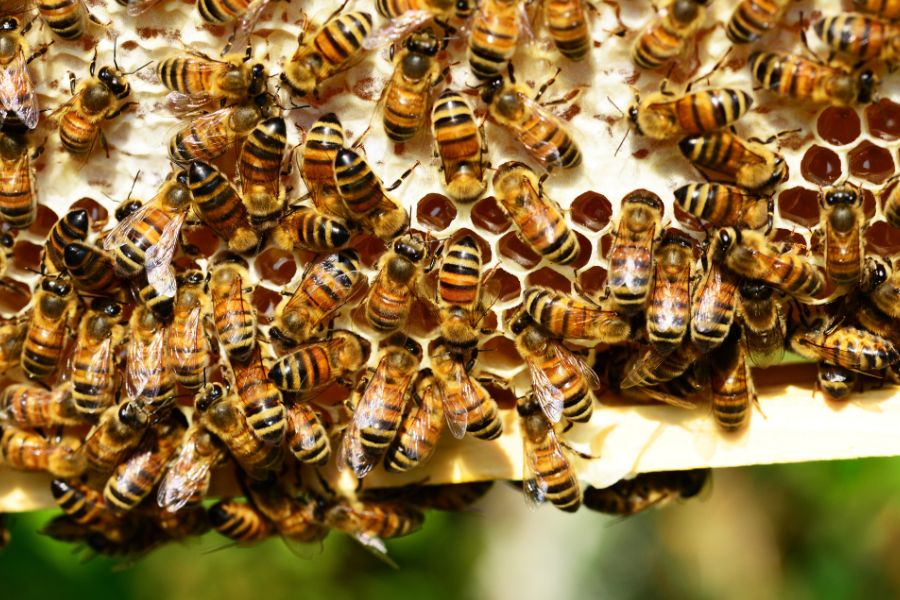
You walk outside, coffee in hand, and stop short. A cluster of buzzing bees is swirling around the corner of your roof, or maybe in a tree by your front door. Cue the panic. While bees are essential pollinators, no one wants a hive setting up shop in their yard or walls.
So what’s the safest way to handle a bee nest? Can you move it yourself? Should you leave it alone? And what happens if you ignore it?
Here’s what every homeowner needs to know about safe, smart bee removal—especially if you live in Southern Nevada, where bee activity is common throughout the warmer months.
First, What Type of Bees Are We Talking About?
Not all bees behave the same, and not all of them build traditional “nests.” That’s why proper identification is step one.
Are they swarming or nesting?
- Swarming bees are often seen clustering on a tree branch or fence post. They’re typically just resting while scout bees look for a new home. These swarms may move on in a day or two without any intervention.
- Nesting bees have settled in. You might see bees flying in and out of a hole in your siding, eaves, or hollow tree. If they’ve been in the same spot for more than 72 hours, they’ve likely started building a hive.
In Nevada, you’re most likely to run into:
- Honey bees (the good guys, but still not safe to approach)
- Carpenter bees (boring into wood and causing damage)
- Africanized honey bees (aggressive hybrids sometimes found in the Southwest)
Each species may require a slightly different approach, but the rule stays the same: don’t go swatting or spraying.
Can You Remove a Bee Nest on Your Own?
Technically, yes. Should you? Not really.
Most DIY methods you’ll find online involve smoke, sprays, or harsh chemicals. But here’s the catch:
- You risk provoking the entire hive.
- You may not remove the queen, meaning they’ll return.
- You can accidentally drive bees deeper into walls or structures.
- If bees are protected species (like honey bees), it may be illegal to kill or relocate them without a license.
Unless you’re trained and wearing full protective gear, trying to handle bee removal yourself is risky, especially if you or anyone in your home is allergic to stings.
What’s the Risk of Leaving a Bee Nest Alone?
Some homeowners hope the problem will solve itself, but that’s rarely the case.
Ignoring a bee nest can lead to:
- Property Damage: Bees in walls or attics can destroy insulation and drywall over time. Honey can attract rodents and cause mold.
- Aggressive Behavior: A threatened hive may become defensive if people or pets walk nearby.
- Increased Size: Colonies can grow rapidly during warm months. The longer you wait, the harder removal becomes.
It’s better to deal with the issue early before the hive expands or bees settle deeper into your home’s structure.
What Does Professional Bee Removal Involve?
Calling in a licensed pest control expert ensures you’re handling the issue humanely, legally, and effectively.
Here’s what professional bee removal typically looks like:
- Identification: The technician will determine the species, size of the hive, and location.
- Safe Relocation or Extermination: Whenever possible, honey bees are relocated to beekeepers or safe habitats. If relocation isn’t possible due to aggression or hive placement, extermination may be necessary.
- Hive Removal: Simply removing the bees isn’t enough. Professionals remove the nest structure and any honey to prevent future pest issues.
- Repairs and Prevention: Some pest control companies offer patching services to seal access points and prevent reinfestation.
Licensed professionals use specialized equipment, suits, and vacuums to ensure safe removal without harming you, your property, or nearby pollinators.
What Should You Do While Waiting for Help?
If you’ve called a pest control service but need to wait for the appointment, here’s how to stay safe:
- Keep your distance. Stay at least 10–15 feet away from the nest or swarm.
- Don’t use the hose. Spraying water will only agitate them.
- Close windows and vents. Bees may find their way indoors through small gaps.
- Avoid vibration. Loud equipment or banging on walls can disturb a hive.
Let the pros handle the tough stuff. Your job is to keep the area quiet and secure until they arrive.
Can Bee Nests Return After Removal?
Yes, especially if hive materials or honeycombs are left behind. That’s why it’s not enough to just spray and pray.
Once bees are gone, it’s important to:
- Seal cracks or gaps where they entered.
- Replace damaged wood, siding, or insulation.
- Use deterrents like bee-proof mesh or citrus oil around entry points..
Don’t Get Stung—Call a Pro
Bee problems are primarily about your family’s safety and your home’s integrity. Don’t gamble with ladders, sprays, or late-night YouTube tutorials.
If you’ve spotted a nest on your property, reach out to Dr. Death Pest Control for expert, efficient, and professional bee removal. We serve homes across Southern Nevada with solutions that prioritize both safety and respect for pollinators.
Book your service today and let us bring the calm back to your yard, no sting operations required.