
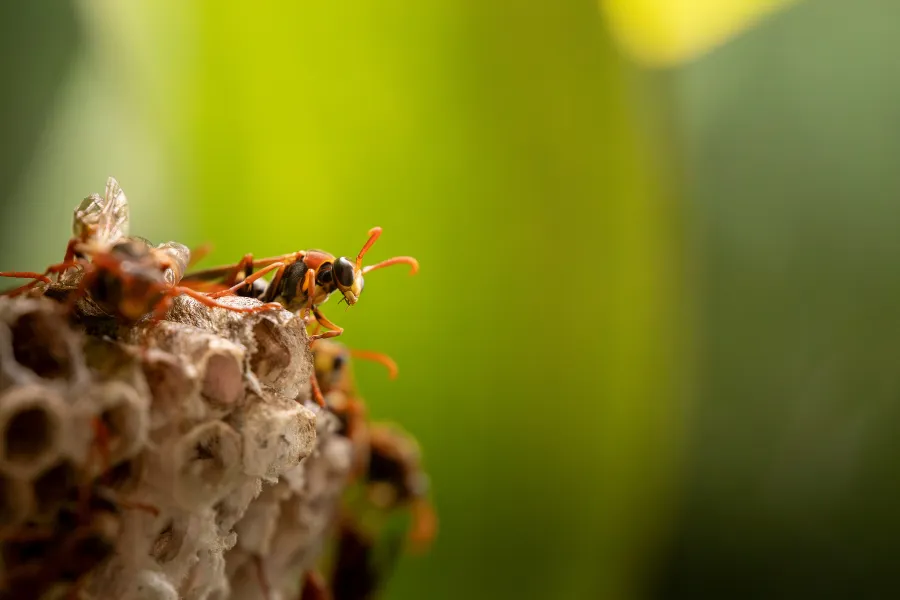
Most Henderson homeowners know this moment. Something yellow starts flying aggressively near the patio, everyone immediately panics, and suddenly nobody is sure if they are dealing with a bee, a wasp, or a tiny airborne supervillain with anger issues.
The problem is that bees and wasps get confused constantly, even though treatment and safety precautions are very different. In Southern Nevada, knowing the difference makes an impact on your pocketbook and whether you should call a professional.
Bees are important pollinators that are usually more defensive than aggressive, while wasps tend to be territorial, aggressive, and much more interested in ruining outdoor activities.
If you are searching for how to tell a bee from a wasp, Henderson and Boulder City homeowners commonly encounter, the good news is there are a few very easy ways to tell them apart once you know what to look for.
And yes, one of them absolutely has a vendetta against your patio meal.
Bee vs Wasp: What’s the Difference?
At first glance, bees and wasps can look pretty similar, especially when they are buzzing around your face at maximum velocity. But once you slow down and look at their appearance and behavior, the differences become much more obvious.
Bees Are Rounder and Fuzzier
Bees usually look rounder, fuzzier, softer in appearance, and tend to be a more golden or brownish color.
They’re not too lazy to shave. In fact, that hairy body actually serves a purpose. Pollen sticks to bees’ peachy exterior while moving from flower to flower, which is why they are such important pollinators.
Wasps, meanwhile, look much sleeker and more dramatic.
They typically sport thin bodies with narrow waists, smooth or shiny exteriors, and bright yellow-and-black coloring. If the insect looks like it spends too much time prepping for a bodybuilder competition, there is a good chance it is a wasp.
Bees and Wasps Behave Very Differently
Behavior is often the easiest giveaway.
Bees are usually focused on flowers, pollination, and generally minding their own business. Most bees do not actively chase people unless they feel threatened or their hive is disturbed.
Wasps are a completely different story.
Wasps are naturally more aggressive and territorial, especially during Henderson summers when food and water sources become more competitive. They tend to hover around outdoor drinks, trash cans, BBQ areas, pool decks, patio food, and outdoor dining areas.
And unlike bees, wasps will not let you go until someone gets hurt, which is a lot like that timeshare presentation I saw in Orlando.
Their Nests Look Different
Nest appearance is another major clue.
Bees may build nests:
- Inside wall voids.
- Underground.
- Inside trees.
- Around sheltered structural spaces.
Wasps commonly build:
- Hanging paper nests.
- Umbrella-shaped nests.
- Roofline nests.
- Underground colonies.
- Eave and patio nests.
Paper wasp nests become very noticeable around Henderson homes during warmer months because they are often attached directly to exterior structures.
Bee Sting vs Wasp Sting Differences Nevada Homeowners Should Know About
One of the biggest differences between bees and wasps shows up when somebody gets stung.
Unfortunately, the only way to know whose sting is whose is to endure those nasty things.
Bee Stings
Most bees can sting only once because their stinger becomes lodged in the skin. After stinging, the bee usually dies.
Bee stings are generally more defensive than aggressive. Most bees sting because they feel threatened, trapped, or believe their hive is in danger.
Signs of a bee sting often include:
- Immediate sharp pain
- Swelling
- Redness
- A visible stinger left behind
Wasp Stings
Wasps are built differently and can sting multiple times.
In the pest control world, we experts call this type of behavior “rude.”
Wasp stings are often:
- More aggressive
- Repeated
- More likely during late summer
- Associated with territorial behavior
That insect with heat-seeking precision is most likely a wasp.
Both bee and wasp stings can trigger allergic reactions, and severe symptoms should always receive immediate medical attention.
Why Wasps Become More Aggressive in Henderson Summers
Wasps in Southern Nevada tend to become especially active during July, August, and early fall.
The combination of extreme heat, outdoor food activity, increased nesting, and limited water sources creates the perfect conditions for aggressive behavior.
As summer progresses, wasp colonies continue growing larger, which means there are simply more wasps competing for resources around residential neighborhoods.
Sugary drinks and outdoor food are major attractants, which–same.
Learn more about summertime pest activity in the Vegas Valley.
Signs You May Have a Hidden Nest
One or two random flying insects outside usually is not a major concern.
But repeated activity around the same area often suggests there may be a nearby nest.
Warning signs include:
- Multiple insects flying in and out of one location
- Buzzing sounds inside walls
- Activity near rooflines or eaves
- Insects gathering around landscaping
- Ground-level insect traffic
- Increased activity near garages or sheds
Underground wasp nests are especially common in Southern Nevada and can be difficult to notice until someone accidentally disturbs them. Which is usually how a normal backyard chore suddenly becomes an Olympic sprint across the yard.
Here are six situations when you MUST call the professionals.
Bee and Wasp Prevention Tips for Henderson Homes
While it is impossible to completely eliminate all stinging insects outdoors, there are several ways homeowners can reduce the chances of attracting large amounts of activity near the home.
Keeping outdoor areas clean plays a huge role. Open trash, sugary spills, pet food, and uncovered drinks all attract wasps quickly during summer.
You can also reduce their numbers by:
- Trimming overgrown landscaping.
- Sealing gaps around rooflines.
- Monitoring patio covers and eaves.
- Reducing standing water.
- Keeping outdoor trash sealed tightly.
- Removing old nests early.
Regular property inspections are important because smaller nests are generally easier to address before colonies expand later in the season.
Outdoor lighting can also increase insect activity around patios and entryways, which may indirectly attract more wasps hunting nearby insects.
Knowing the Difference Can Help You Respond Safely
Bees and wasps may look somewhat similar at first glance, but their behavior, nesting habits, and risk levels are often very different.
Nests can appear around patios, garages, rooflines, or outdoor gathering spaces in Henderson and Boulder City and cause a lot of panic. Knowing how to tell a bee from a wasp is the first step to solving the infestation.
While bees usually prefer flowers over violence, wasps are much more likely to escalate the situation for absolutely no reason.
At Dr. Death Pest Control, professional pest control and Bee Removal Services help Henderson homeowners safely identify and address bee and wasp activity before backyard season turns into a full-contact outdoor survival experience.
Frequently Asked Questions
Bees are usually rounder and fuzzier with softer coloring, while wasps have thinner bodies, narrow waists, and brighter yellow-and-black coloring. Wasps also tend to behave more aggressively around food and people.
Yes. Wasps are generally more territorial and aggressive than bees, especially during Henderson summers when food and water sources become limited. Bees are typically defensive and only sting when threatened.
Avoid disturbing the nest and keep children and pets away from the area. Wasps can sting multiple times and may become aggressive if they feel threatened, so professional removal is usually the safest option.
Most bees can only sting once because their stinger gets stuck in the skin. Wasps can sting multiple times, which is one reason they are considered more dangerous around patios, pools, and outdoor gathering spaces.
You should call a professional if you notice repeated insect activity, visible nests, buzzing inside walls, or aggressive behavior near entryways, patios, garages, or rooflines. Hidden nests can grow quickly during the warmer months in Southern Nevada.